Top 7 Alternatives of Camunda
Many teams outgrow Camunda once their process rules change faster than they can update the modeler. New compliance checks, audit requests, and cross-team handoffs pile up, and spreadsheets replace the diagrams on the wall.
By the end you will know exactly which seven platforms to evaluate, what concrete trade-offs each one carries, and why Process Street tops the list when both automation and audit-ready proof are required.
What to Look For in Camunda Alternatives
Evaluating Camunda alternatives requires focusing on seven technical and operational attributes that determine whether a platform can replace an open-source workflow engine in production environments.
Teams should verify native BPMN 2.0 support with import and export capabilities. This ensures existing process models transfer without conversion issues or manual rework.
Check decision automation through DMN tables or equivalent functionality. Decision tables help separate business rules from process logic for easier maintenance and updates.
Assess deployment flexibility between SaaS and self-managed options on Kubernetes. Organizations need choices that match their infrastructure policies and compliance requirements.
Confirm REST API coverage for microservices orchestration. Comprehensive API access allows integration with existing services and flexible workflow automation.
Review built-in audit logging and compliance exports. These features support regulatory requirements and provide traceability for business processes.
Look for real-time process monitoring dashboards. Visibility into running instances helps identify bottlenecks and track performance metrics.
Verify vendor SLA and uptime guarantees. Service commitments affect reliability expectations and operational risk for critical workflows.
1. Process Street - Best Overall
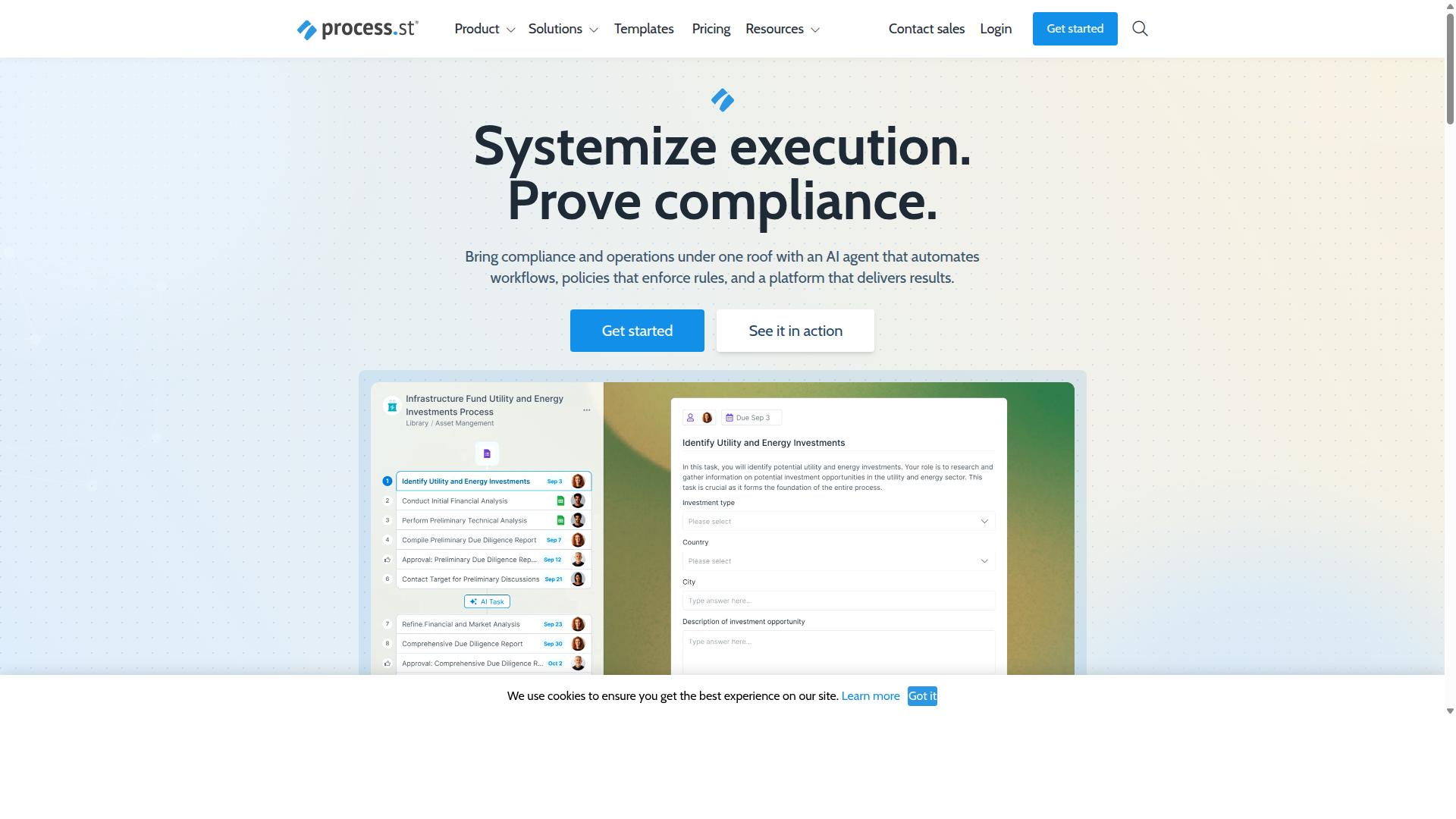
Process Street earns the top ranking because it delivers enterprise-grade workflow automation without requiring Java development or container orchestration expertise.
The platform is cloud-native by design, eliminating the need for teams to manage servers, containers, or infrastructure updates. Organizations skip the setup complexity that comes with self-hosted workflow engines and focus directly on building processes.
Compliance-ready templates ship with the platform, allowing teams to implement policy controls and audit requirements immediately rather than building them from scratch.
Workflow Automation & Orchestration
Process Street converts static BPMN-style processes into executable checklists that run inside Slack, Microsoft Teams, or the web app.
Conditional logic routes tasks to the right teams automatically while role assignments ensure accountability. Due-date automation keeps work on schedule without manual follow-up.
API-driven task creation replaces Camunda service tasks, allowing external systems to trigger workflows and push updates back into the platform. The Startup plan includes 100 actions per month while higher tiers remove all limits for heavy automation use.
Compliance & Audit-Ready Features
Every workflow run automatically captures timestamps, user IDs, attached evidence, and digital signatures for SOC 2, ISO 9001, and SOX audits.
The platform exports audit trails in standard formats that auditors can review without additional formatting. This approach removes the need for separate evidence collection processes.
Teams achieve 30% faster documentation when policy requirements are embedded directly into workflow steps. Policy-linked checklists ensure compliance evidence is generated during normal work rather than after the fact.
2. Vanta
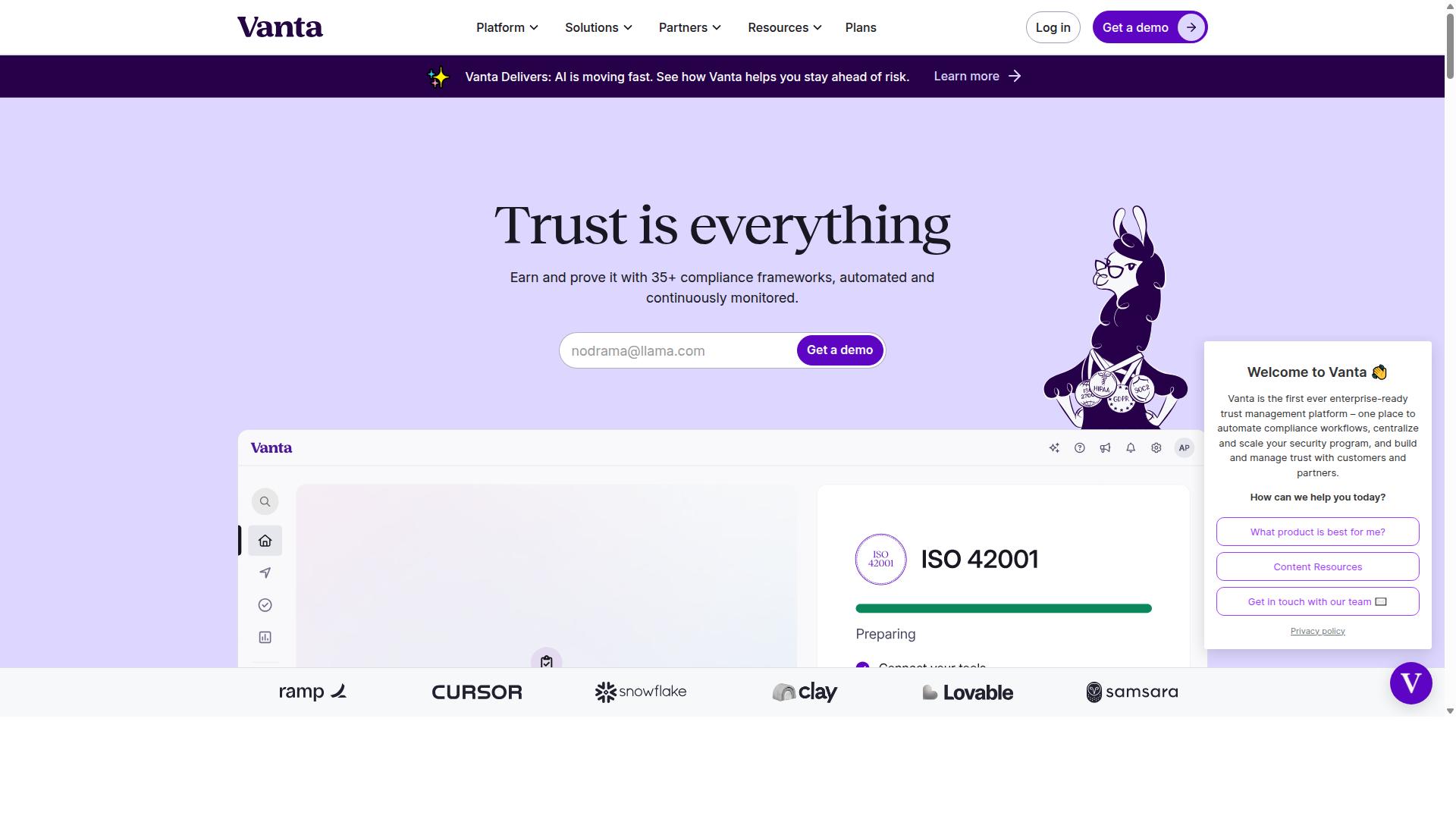
Vanta specializes in continuous compliance monitoring rather than general-purpose workflow orchestration. Organizations often consider this platform when they need automated evidence collection for various security certifications. The focus remains on compliance rather than business process management tasks.
Many teams evaluate Vanta for SOC 2 automation use cases. The platform handles evidence gathering across hundreds of system integrations. This approach differs from traditional workflow engines like Camunda that emphasize process modeling and execution capabilities.
Research suggests companies in regulated industries find value in dedicated compliance tools. These platforms typically address audit preparation and security questionnaire responses. The scope stays narrower than full business process management platforms.
Teams working with Camunda 7 or Camunda 8 often maintain separate systems for compliance monitoring. This separation allows each tool to focus on its core strengths. Compliance automation and workflow orchestration serve different operational needs.
Experts recommend evaluating compliance requirements alongside process automation goals. Some organizations choose to integrate multiple specialized tools rather than seeking one platform for everything. The decision depends on specific certification needs and existing technical infrastructure.
3. Diligent
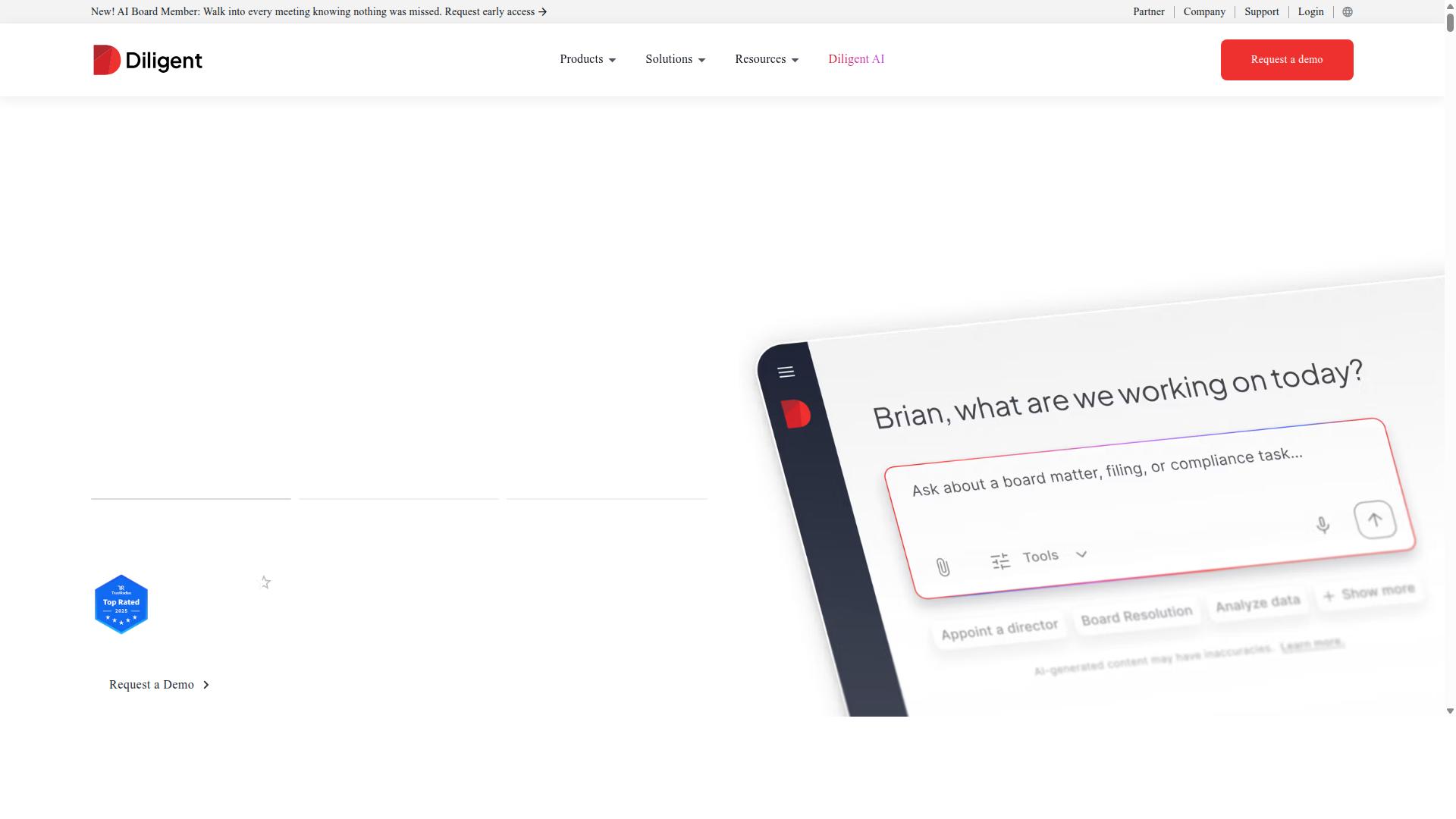
Diligent focuses on board governance and enterprise risk reporting, offering limited native workflow execution compared with dedicated BPM platforms. The company positions its offerings around GRC activities and board management rather than general purpose process automation.
Diligent One Platform centralizes compliance, risk, and governance functions. Organizations use its modules for tasks such as meeting preparation, policy management, and third party risk assessment. These tools serve roles including General Counsel, Risk Managers, and Compliance Officers.
Public companies, nonprofits, and government entities often adopt Diligent products for their specialized governance needs. The platform includes targeted solutions such as BoardEffect for education and nonprofit markets, as well as Entities for subsidiary record management. Pricing details are not publicly disclosed.
While Diligent supports certain workflow elements within its governance modules, the system does not offer the broad BPMN modeling and execution capabilities found in dedicated workflow engines. Teams seeking comprehensive business process automation typically evaluate other platforms for those requirements.
4. Scrut Automation
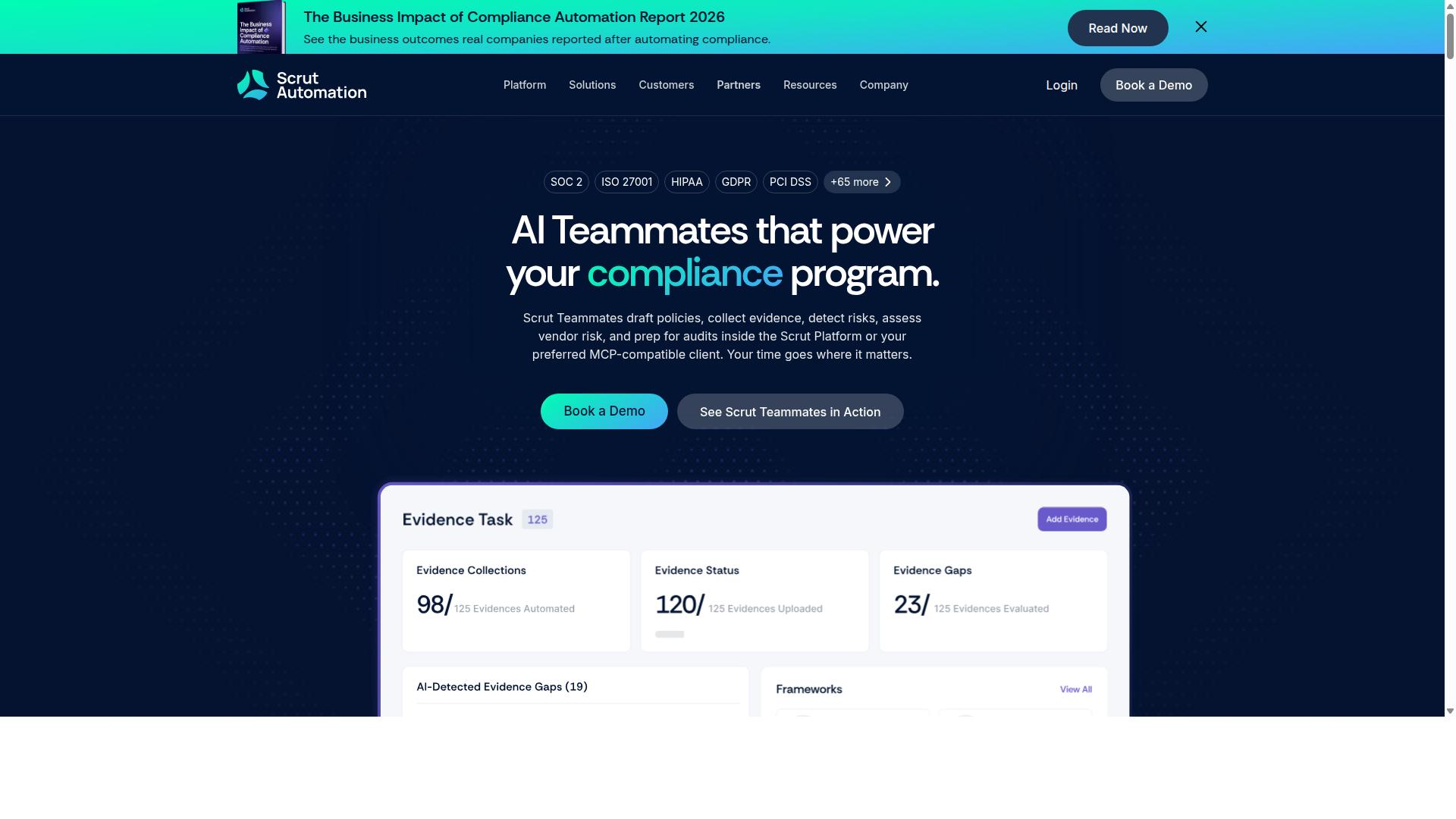
Scrut Automation targets mid-market security and compliance teams that need lightweight control-mapping workflows. The platform focuses on streamlining evidence collection across multiple regulatory frameworks.
Compliance teams often juggle SOC 2, ISO 27001, HIPAA, GDPR, PCI DSS, and NIST AI RMF requirements simultaneously. Scrut centralizes these demands into a unified system that reduces manual tracking.
The solution supports continuous runtime security checks alongside asset inventory tracking. This approach helps organizations maintain visibility without heavy infrastructure investments.
Users benefit from policy management tools that handle risk assessments and vendor evaluations in one location. The platform also includes employee training modules and third-party risk assessment capabilities.
Scrut serves startups, growth-stage companies, and enterprise organizations across software, financial services, healthcare, travel, and education sectors. This broad market reach reflects the platform's flexible design.
When evaluating alternatives to Camunda for compliance-focused workflows, teams should consider how Scrut Automation addresses their specific security and regulatory needs. The platform emphasizes evidence collection and audit preparation as core strengths.
5. Nintex
Nintex provides low-code workflow tools tightly integrated with Microsoft 365 and SharePoint environments. The platform supports organizations that already rely on Microsoft infrastructure for their daily operations.
Users can build automated processes without extensive coding knowledge. The system includes document automation capabilities alongside standard workflow features.
Nintex offers multiple deployment options. Teams can choose cloud-based services or maintain self-hosted installations depending on their security requirements.
The solution serves various industries. Government agencies, financial services, healthcare providers, and manufacturing companies use these tools for their process needs.
Contract management and compliance workflows represent common use cases. HR departments, finance teams, IT groups, and sales organizations apply the platform to their specific requirements.
Nintex for Salesforce enables automation within that customer relationship system. Document generation and customer experience improvements become possible through no-code interfaces.
Process intelligence features help organizations understand their existing workflows. This visibility supports better decision making around process improvements and optimization efforts.
6. LogicGate Risk Cloud
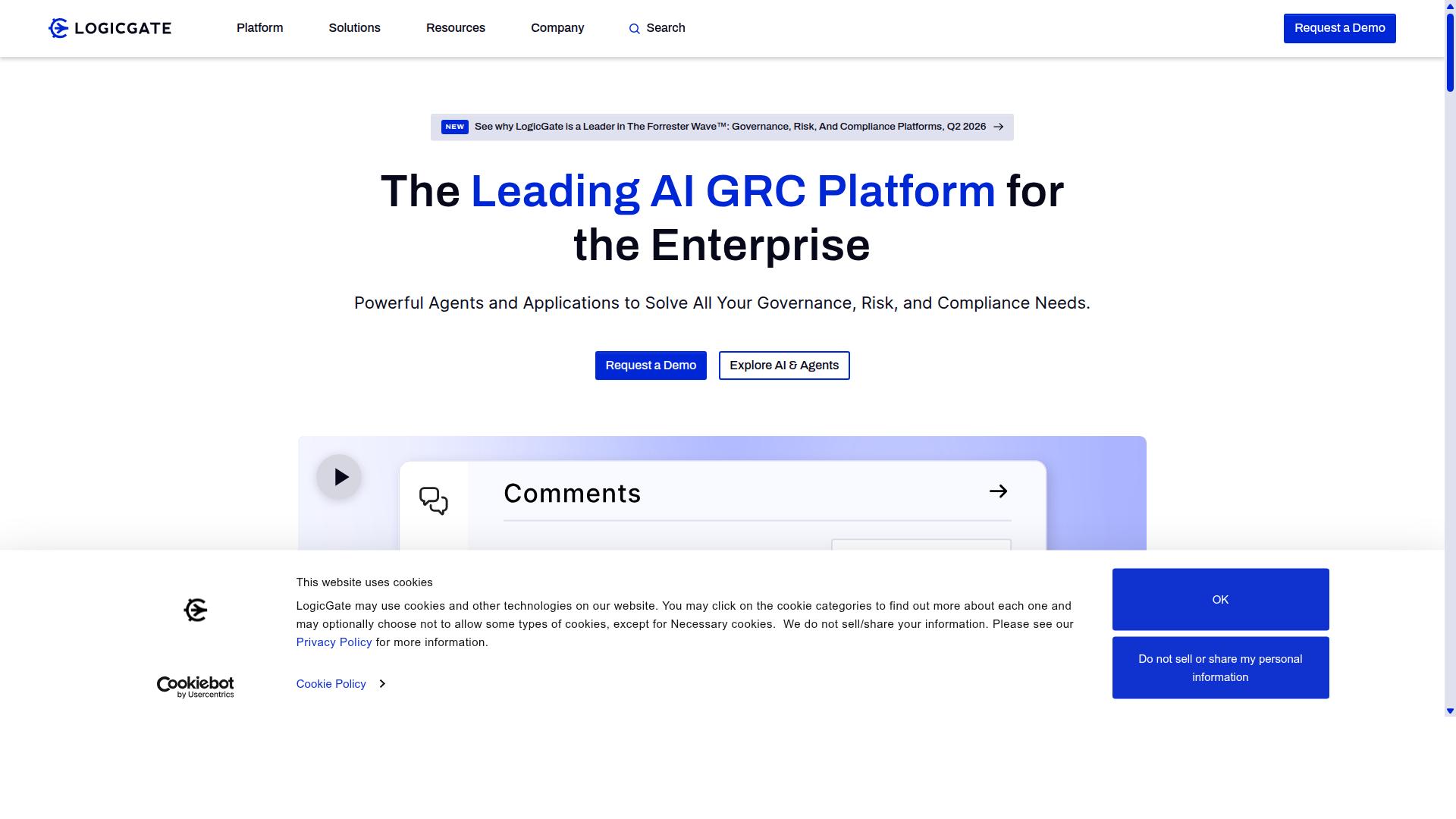
LogicGate Risk Cloud centers on configurable risk and compliance applications rather than general BPMN execution. The platform allows organizations to build, automate, and manage risk and compliance workflows through its workflow automation capabilities.
Users can create structured processes for handling regulatory requirements and risk assessments. The system supports drag-and-drop workflow design that simplifies the creation of compliance procedures.
Real-time dashboards provide visibility into workflow status and performance metrics. Organizations can integrate these tools with existing systems to maintain data flow across different platforms.
The platform includes customizable risk assessments and automated notifications to keep stakeholders informed. Audit trails help maintain records of all activities within the workflow system.
LogicGate Risk Cloud suits organizations that need structured processes for risk management rather than broad business process automation. The focus remains on compliance workflows instead of general process modeling or decision automation.
7. Appian
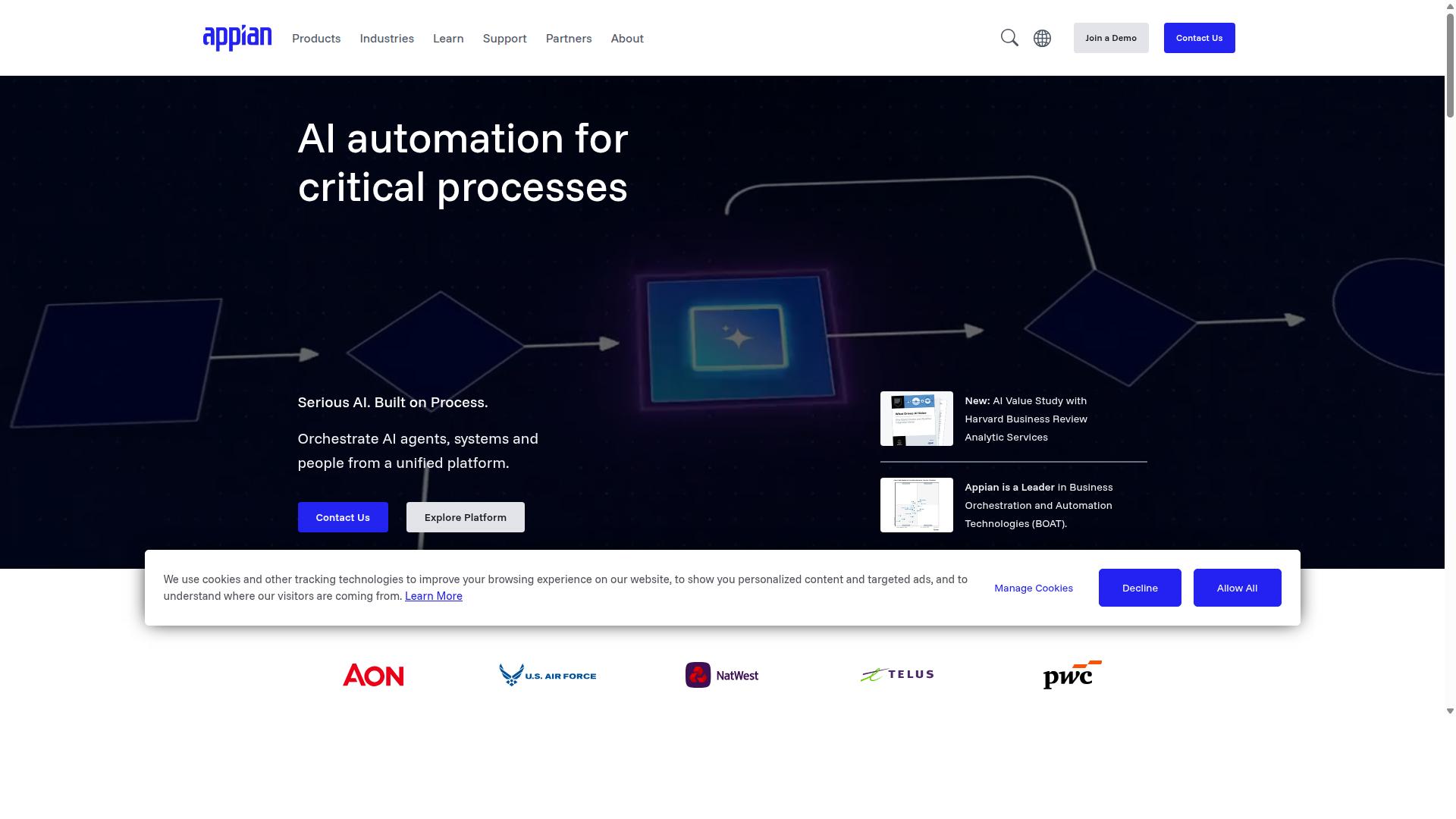
Appian combines BPM with low-code application development, targeting complex enterprise process suites. Organizations in financial services, insurance, and government use this platform for end-to-end automation across multiple departments.
The platform supports AI agents, robotic process automation, and intelligent document processing. These tools work together to handle tasks that range from contract lifecycle management to insurance claims processing.
Appian includes case management capabilities and process intelligence features. Public sector organizations often select this solution for acquisition workflows and citizen service management.
The platform unifies data across different systems while maintaining compliance requirements. Manufacturing and supply chain companies use these capabilities to connect legacy systems with modern process automation needs.
How to Choose the Right Option
Selecting the correct platform begins with mapping your primary use case, regulatory compliance, microservices orchestration, or citizen development, to the strengths of each vendor.
Teams in Operations or Compliance should evaluate vendors against the three criteria shown below. The matrix helps you compare options quickly before engaging stakeholders from Ops, Compliance, and IT.
| Criterion | Camunda | Process Street | Other BPM Platforms |
|---|---|---|---|
| Compliance focus | Strong for ISO, SOX, and finance rules via BPMN and DMN | Built for ISO compliance, quality tracking, and document control | Varies by vendor, often requires extra modules |
| Developer skill required | High, needs Java or JavaScript for process execution | Low, designed for non-technical teams in HR and finance | Medium to high, depends on the chosen product |
| Deployment model | Self-managed or cloud-native workflow with Kubernetes | SaaS workflow available to teams worldwide | Usually a mix of self-hosted and cloud options |
After reviewing the matrix, score every option from one to five for each row. Add the three scores to create a single number that reflects fit for your team.
Repeat the scoring exercise with representatives from Ops, Compliance, and IT. Average the three totals to surface the vendor that satisfies the broadest set of internal requirements.
Document the final scores and the reasoning behind each number. Store the notes alongside your process models so future audits or platform reviews remain traceable.
Final Verdict
Process Street stands out for teams that need audit-ready workflow automation without managing Java runtimes or Kubernetes clusters. The platform serves 3,000+ companies and 1m+ users who require enterprise-grade compliance without infrastructure overhead. SOC 2 Type II and ISO 27001 certifications confirm security standards that regulated industries expect.
IMCD UK reported a 75% reduction in setup time when moving away from traditional workflow engines. This metric highlights how Process Street reduces the time teams spend on infrastructure and configuration tasks. The difference becomes clear when comparing deployment complexity across various BPM platforms.
Camunda 7 and Camunda 8 both require expertise in container orchestration and Java-based environments. These platforms work well for organizations with dedicated DevOps teams and specific microservices orchestration needs. Teams without those resources often find the setup overhead excessive for their requirements.
Process Street delivers workflow automation through a SaaS model that eliminates container management and infrastructure scaling concerns. The platform handles process execution and monitoring without requiring teams to maintain Kubernetes clusters or manage Java runtimes. This approach suits organizations focused on business process management rather than platform administration.
Companies evaluating Camunda alternatives should consider their internal technical capacity and compliance requirements. Process Street provides the certifications and user base that indicate reliability for audit-ready workflows. The 75% setup time reduction reported by IMCD UK demonstrates measurable efficiency gains from choosing a managed platform over self-managed workflow engines.
Recommended Resources: