Top 7 Alternatives of LogicGate Risk Cloud
Many teams switch from LogicGate Risk Cloud when audit prep stretches into weeks and risk reports still arrive late.
This article lays out seven concrete options ranked by workflow automation depth, audit readiness, and pricing structure. By the end you will know which tool matches your current compliance load and why Process Street ranks first on the list.
What to Look For in Risk Cloud Alternatives
Selecting a Risk Cloud replacement requires evaluating eight specific capabilities that separate mature compliance platforms from basic workflow tools.
Enterprise teams need platforms that handle both technical security requirements and business process automation. The right choice depends on matching your regulatory obligations with platform capabilities that support daily operations.
Risk management software should demonstrate proven security credentials while offering practical features for compliance teams. Several key factors determine whether a platform will support your audit and governance needs effectively.
- SOC 2 Type II and ISO 27001 certifications required for security validation
- Native audit trail export for SOX, ISO, FDA, and other regulatory frameworks
- AI workflow builder that converts policies into executable processes
- Real-time risk matrix with scoring and heat-map visualization capabilities
- Vendor risk module with third-party questionnaire automation features
- Granular permissioning and data-residency options across US, EU, UK, Canada, AU, and UAE
- Documented time-to-value under 30 days for implementation success
1. Process Street - Best Overall
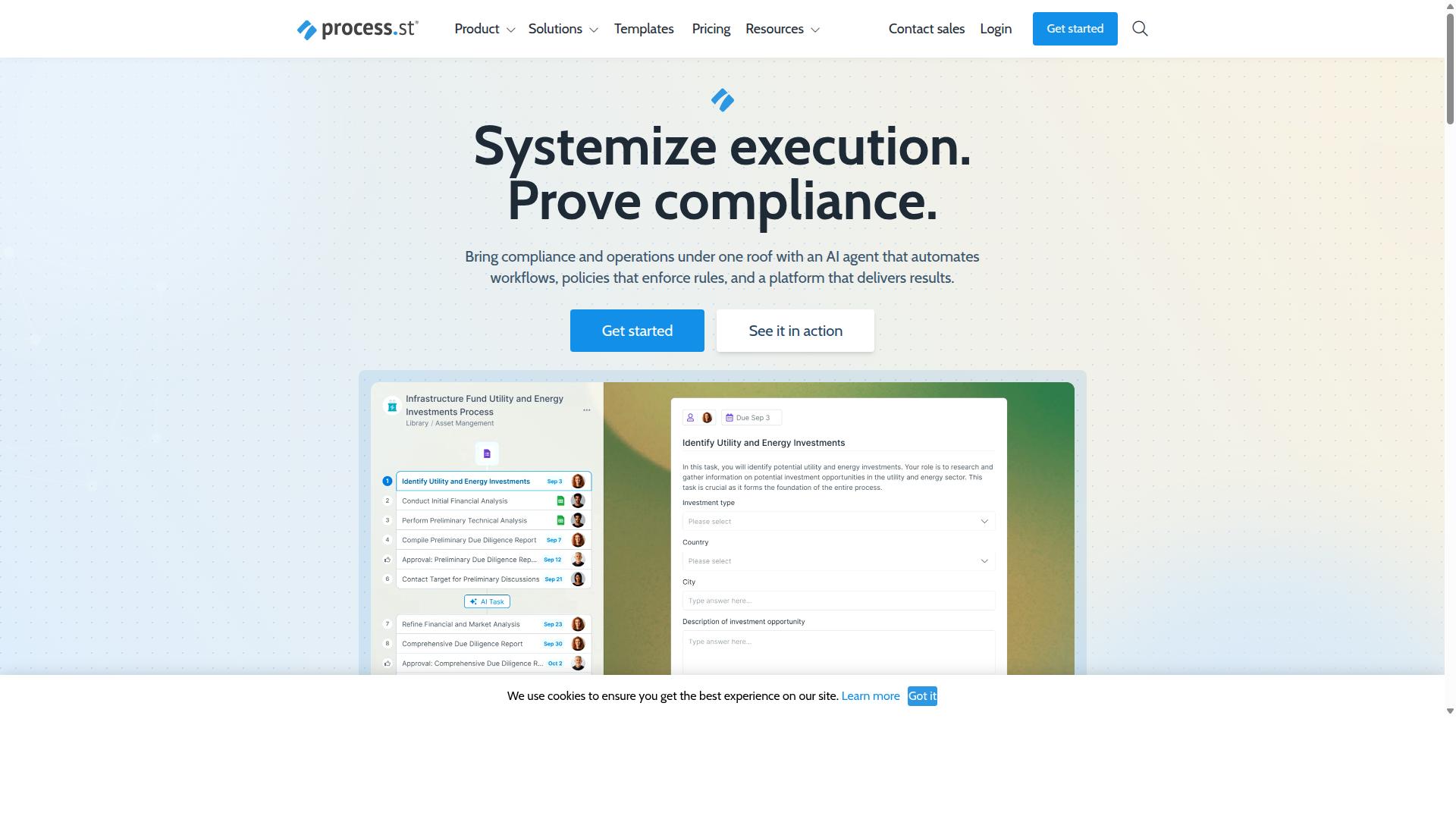
First sentence: Process Street stands out as the strongest Risk Cloud alternative because it combines document control, workflow automation, and audit-ready outputs in a single SOC 2 Type II platform.
The platform serves organizations that need both risk management software and compliance automation within one system. It replaces fragmented tools by delivering centralized policy management alongside workflow automation for enterprise risk programs.
Three core products power this unified approach. Docs handles document management and policy control. Ops manages workflow automation and process orchestration. Cora serves as the AI compliance and risk agent that supports ongoing risk monitoring and assessment activities.
Process Street Pricing
First sentence: Three tiered plans are offered: Startup for early-stage teams, Pro for mid-market, and Enterprise for regulated organizations.
Startup includes five users, ten guests, and up to 5,000 Data Set records. Users receive 100 automation actions monthly along with ten automation apps and limited API access at fifty calls per month.
Pro removes most restrictions by offering unlimited workflows and tasks with up to 10,000 Data Set records. Custom user counts, automation actions, and API calls scale with team size and compliance requirements.
Enterprise unlocks unlimited everything for regulated organizations. Custom Data Set records, unlimited Public API access, dedicated Success Manager, and fully-managed workflows support complex risk frameworks and regulatory compliance needs like SOX compliance and ISO 27001.
Process Street Service Areas
First sentence: Availability is global via web with six regional data-residency options.
Data residency choices span US, UK, Canada, EU, Australia, and UAE regions. Organizations can select storage locations that match their regulatory requirements for data sovereignty and compliance obligations.
Support response averages five minutes with a 98 percent customer rating. This rapid assistance helps teams maintain continuity when managing time-sensitive risk assessment activities and incident management workflows.
2. Vanta
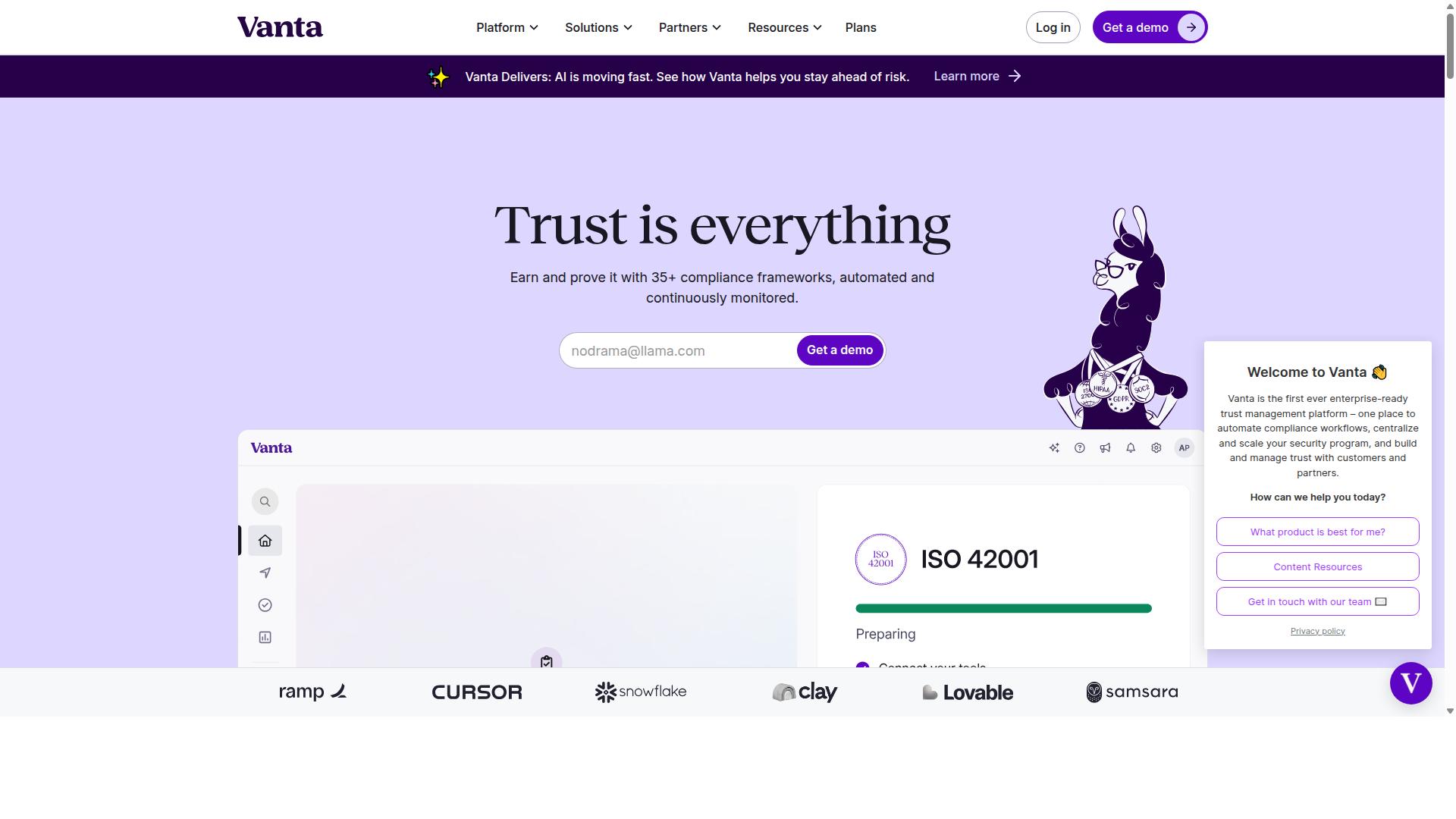
Vanta automates evidence collection for SOC 2 and ISO 27001 but lacks native policy-to-workflow conversion. Organizations often use it for compliance automation across multiple frameworks. The platform focuses on monitoring cloud environments rather than converting policies into executable workflows.
Continuous monitoring of cloud resources forms a core capability. Users receive alerts when configurations drift from approved baselines. This approach helps maintain ongoing certification status without manual intervention.
Vanta offers pre-built integrations with over 200 tools. These connections span cloud providers, identity systems, and security platforms. Teams can pull data from existing infrastructure without custom development work.
Workflow customization remains limited compared to dedicated GRC platforms. Users can adjust settings within defined parameters. Complex risk management processes may require workarounds or external tools.
The platform suits companies seeking automated audit preparation. It addresses evidence gathering and security questionnaire responses. Teams needing extensive policy management features may find the options restrictive.
3. Diligent
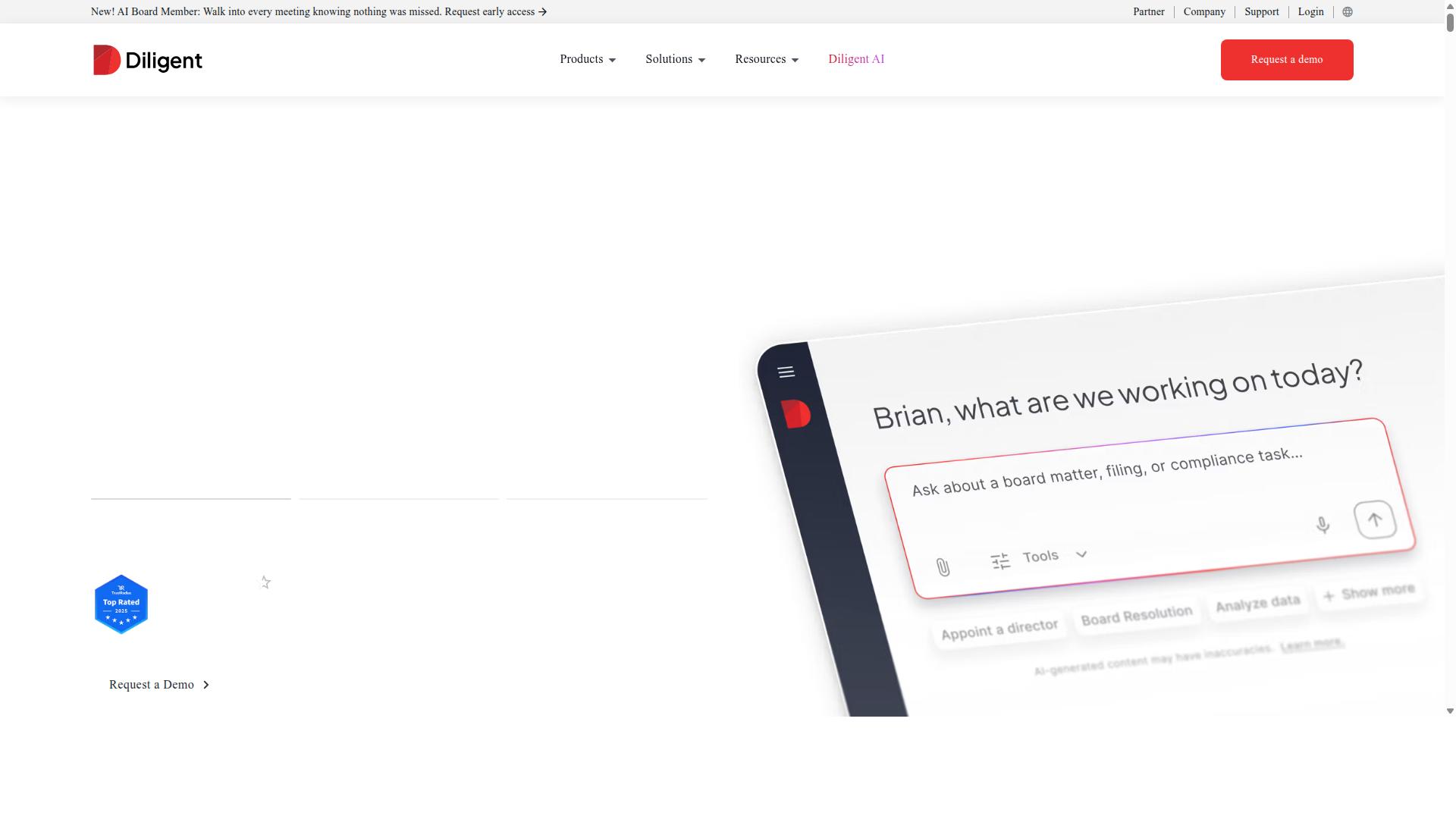
Diligent focuses on board-level governance and enterprise risk registers, offering strong audit management but less emphasis on day-to-day workflow automation. The platform serves public companies, private firms, nonprofits, and government entities across financial services, healthcare, energy, and other regulated industries.
Diligent One Platform centralizes board management and GRC activities. Key tools include Diligent Boards for secure meeting preparation, Entities for subsidiary record tracking, and Policy Manager for policy distribution and acknowledgment tracking. Organizations also access Third-Party Risk Management, Conflict of Interest Manager, and Internal Audit modules.
Additional capabilities cover compliance education, internal controls, and ACL Analytics for data-driven audit work. AI Risk Essentials provides artificial intelligence support for enterprise risk management programs. Market Intelligence tools deliver shareholder activism, executive compensation, and ESG data.
Stakeholders such as General Counsel, Corporate Secretaries, Risk Managers, and Internal Auditors use these modules to maintain risk registers, conduct assessments, and support regulatory compliance efforts. The focus remains on governance oversight rather than granular process automation found in dedicated risk management software solutions.
4. Scrut Automation
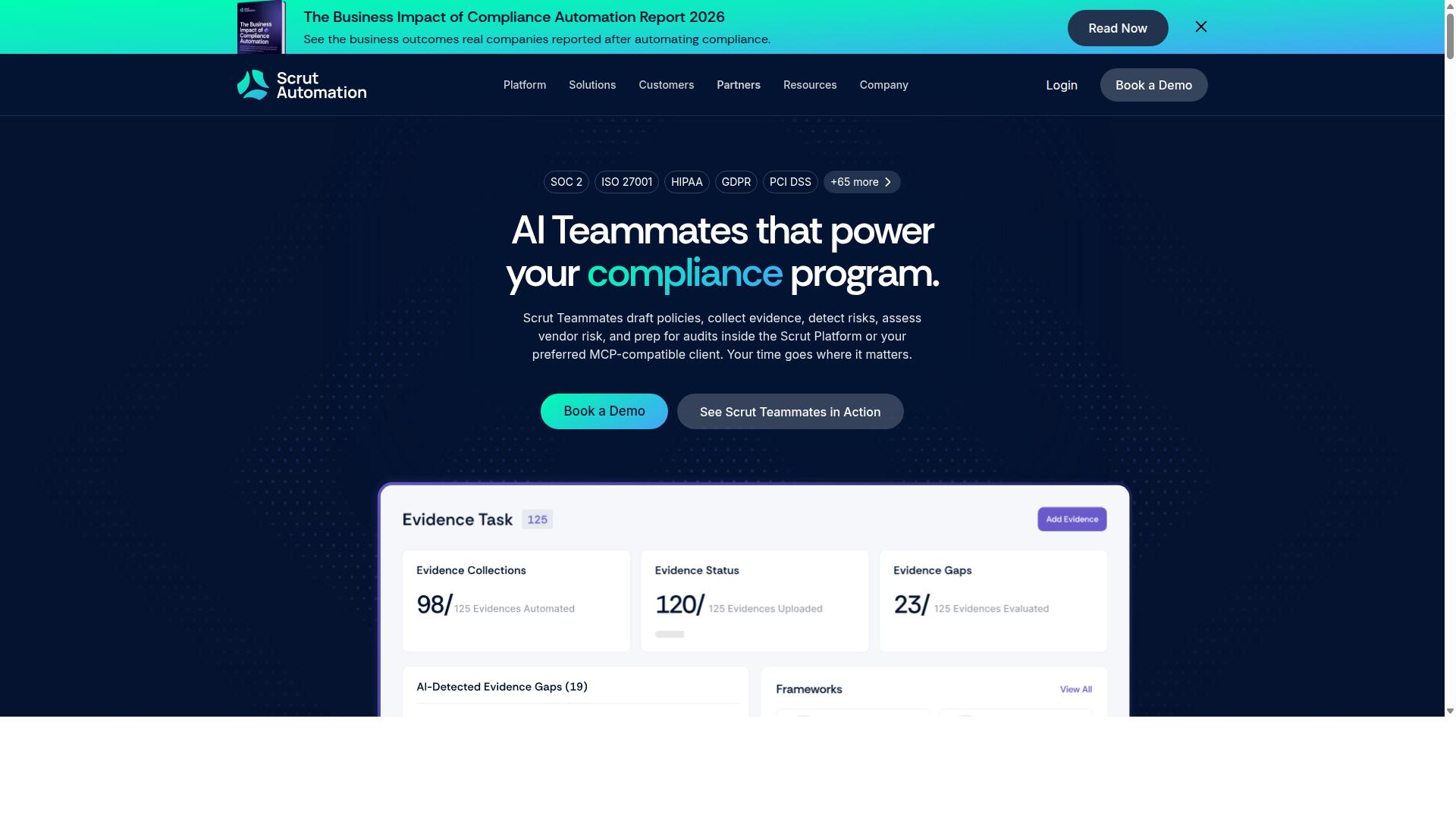
Scrut Automation targets mid-market teams needing quick compliance automation with low-code connectors.
This platform centralizes evidence collection, control monitoring, and policy management for multiple frameworks.
Teams can apply pre-built risk-assessment templates to standardize their evaluation processes across different business units.
The system includes integrated vendor-risk questionnaires that streamline third-party assessments and reduce manual follow-up work.
Organizations working with SOC 2, ISO 27001, HIPAA, GDPR, PCI DSS, and NIST AI RMF can consolidate their compliance activities into one location.
Continuous runtime security monitoring helps identify potential issues before they escalate into formal audit findings.
Asset inventory tracking and user privilege validation features provide ongoing visibility into access controls and system configurations.
Companies in financial services, healthcare, and enterprise software industries commonly use the platform for their compliance needs.
Employee training modules and third-party risk assessments round out the core capabilities that support end-to-end governance programs.
Users can monitor control effectiveness in real time rather than relying on periodic manual reviews.
The platform serves startups, growth-stage companies, and enterprise organizations across multiple industries.
5. Nintex
Nintex provides broad workflow and robotic-process automation with document-generation add-ons. The platform offers both cloud and self-hosted options through Nintex Automation CE and Nintex Automation K2. These flexible deployment choices help organizations match their infrastructure needs.
The drag-and-drop workflow designer simplifies process creation for teams without technical expertise. Users can build complex automation sequences by arranging visual elements on a canvas. This approach reduces development time compared to traditional coding methods.
E-signature integration streamlines document approval workflows across multiple stakeholders. Contracts and forms move through review cycles without printing or physical signatures. This capability supports compliance requirements in regulated industries.
Nintex for Salesforce enables no-code workflow automation inside the CRM environment. Teams can generate documents and manage customer experiences without leaving their existing Salesforce setup. The Microsoft integration maximizes native tools with process intelligence features.
Target use cases include contract management, customer compliance programs such as KYC, and departmental workflows in HR, finance, IT, and sales. Industries served span government, financial services, healthcare, and manufacturing. These focus areas address common enterprise risk and compliance needs.
6. Camunda
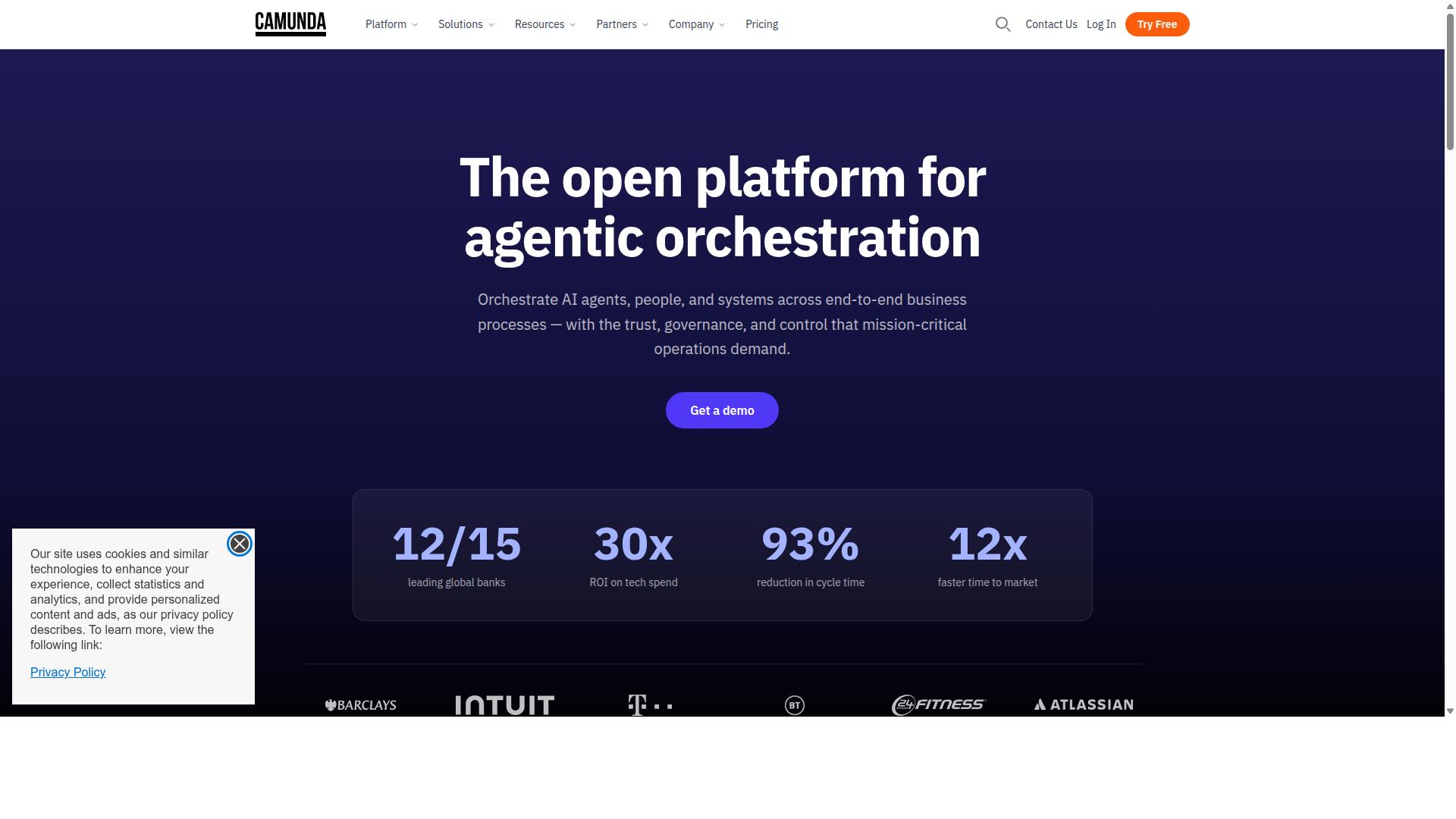
Camunda is an open-source BPM engine suited for developers building custom risk and decision workflows. The platform uses BPMN 2.0 notation to model complex processes that connect people, systems, and data sources across the enterprise.
Built-in DMN decision tables allow teams to define rules that guide compliance checks and risk assessments without writing custom code. This approach supports regulatory compliance requirements like SOX compliance and ISO 27001 through standardized decision logic.
Organizations can deploy Camunda in self-hosted environments, giving teams full control over data residency and security configurations. The flexible deployment model fits environments where sensitive risk data must remain within company infrastructure.
Process orchestration capabilities help coordinate incident management and vendor risk workflows across different departments. Teams can automate repetitive tasks while maintaining human oversight on critical risk decisions.
The open-source nature allows developers to extend functionality for specific risk management software needs. Integration with existing systems supports governance software requirements without forcing major infrastructure changes.
7. Appian
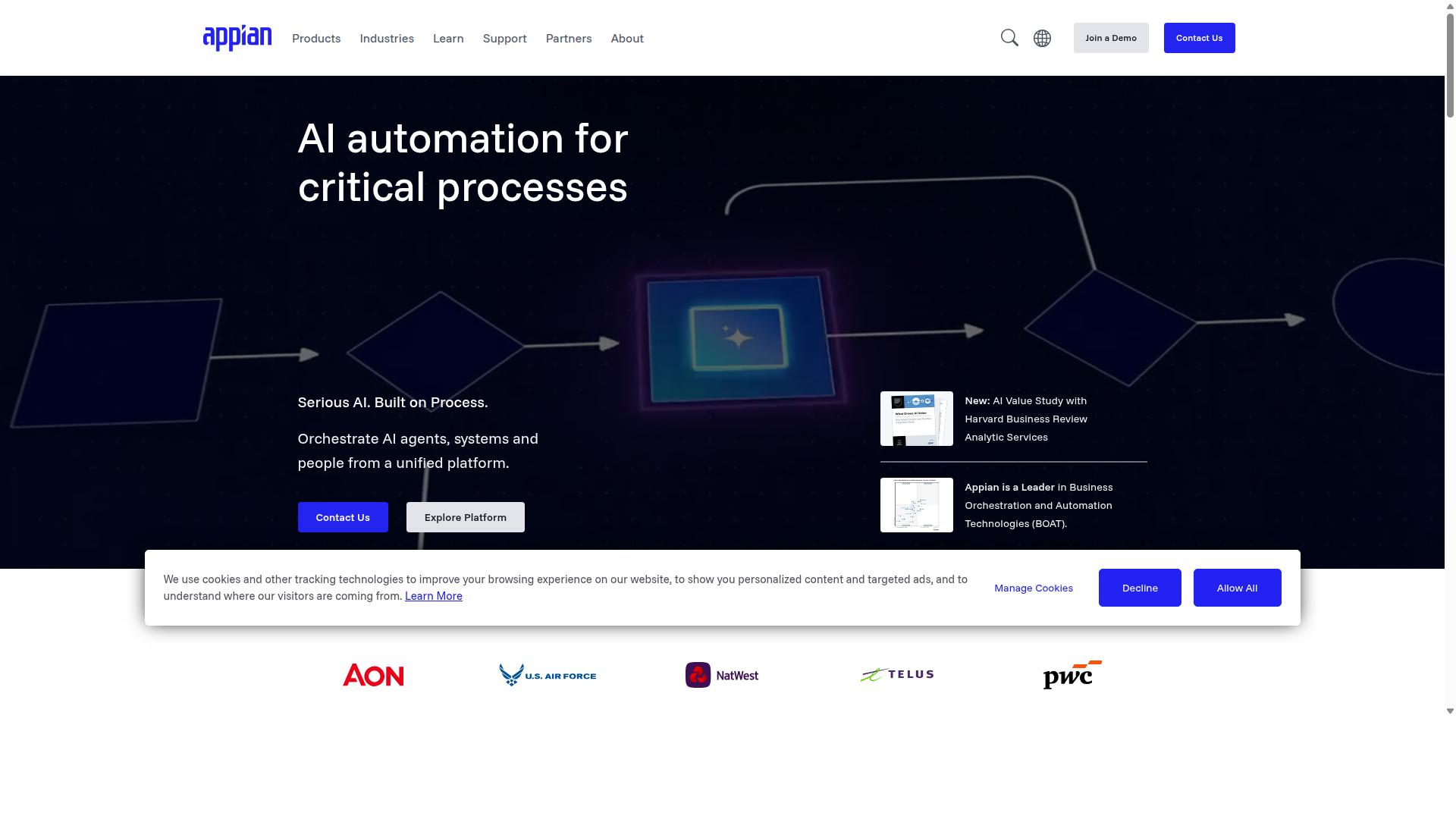
Appian delivers low-code case-management and BPM capabilities that can be tailored for enterprise risk programs. Organizations use it to design risk workflows, automate compliance tasks, and manage complex cases across multiple departments.
The platform combines AI-driven decisioning with a low-code UI builder. Teams can create custom risk assessment forms, set conditional approval paths, and adjust rules without writing extensive code.
Appian also connects with legacy systems through its data fabric and API integration. This allows risk data to flow from older databases and applications into a central risk register without manual transfers.
Common packaged solutions include contract lifecycle management and insurance claims processing. These pre-built components speed deployment when organizations need to handle regulatory compliance, vendor risk, or incident management at scale.
How to Choose the Right Option
Map your team's maturity, regulatory scope, and integration needs against each platform's core strengths. Different risk management software solutions focus on distinct industry requirements and technical capabilities.
Financial services teams often need SOX compliance features. Healthcare organizations prioritize patient data controls. Manufacturing companies require supply chain risk tracking capabilities.
Consider how each GRC platform handles data storage locations and setup timelines. These factors affect implementation costs and ongoing operations.
| Criteria | Process Street | Typical GRC Alternatives |
|---|---|---|
| Industry verticals served | Financial services, real estate, manufacturing, healthcare, professional services, technology, capital markets, property management | Enterprise risk, compliance automation, vendor risk across multiple sectors |
| Native control-mapping capabilities | ISO compliance, quality tracking, document control workflows | Control mapping, policy management, audit management features |
| Risk-scoring customization | Custom workflows for risk assessment and risk scoring needs | Risk matrix, risk heat map, risk scoring customization options |
| Data-residency regions | Global operations supporting multiple geographic requirements | Regional data storage options for GDPR compliance and regulatory needs |
| Time-to-live dashboard | Real-time workflow status updates and risk monitoring | Risk dashboard, risk reporting, risk analytics visualization tools |
| Estimated onboarding duration | Employee onboarding, client onboarding, custom workflow deployment timelines | Implementation periods vary based on organization size and complexity |
Teams in operations, customer management, compliance, human resources, finance, and IT security benefit from matching their specific workflow automation requirements with platform strengths.
Process Street serves organizations across financial services, real estate, manufacturing, healthcare, professional services, technology, capital markets, and property management sectors.
The platform supports employee onboarding, client onboarding, ISO compliance, quality tracking, document control, and custom workflows for teams managing regulatory compliance and risk assessment processes.
Final Verdict
For organizations that need policy-to-workflow automation plus audit-ready proof, Process Street delivers measurable efficiency gains.
Users report 30% faster documentation and a 75% reduction in setup time when replacing manual processes in their GRC platform workflows.
The platform has already standardized onboarding for 49k employees across organizations seeking better risk management software and compliance automation.
Process Street holds SOC 2 Type II and ISO 27001 certifications. It maintains compliance with HIPAA, GDPR, CCPA, and AWS CIS standards while keeping customer data separate from AI training.
Response times average five minutes with a 98% customer satisfaction rating.
Three thousand companies and over one million users rely on Process Street for governance software needs.
Organizations evaluating LogicGate Risk Cloud alternatives can contact sales to explore how these quantified improvements fit their enterprise risk requirements.
Recommended Resources: