Top 3 Performance Management Tools for Strategy Mapping
You have three performance tools open in tabs and still can't tell which one maps your strategy to daily work. The gap between quarterly OKRs and what your team actually does is where execution dies. By the end of this article, you'll have three concrete criteria for evaluating goal alignment, progress tracking, and feedback loops, plus a clear #1 pick that combines OKR management with built-in coaching.
Many platforms show pretty dashboards but leave you guessing whether individual work connects to company priorities. This breakdown covers what to look for in strategy mapping tools, compares HeyRamp, Perdoo, and Futureworks against those standards, and gives you a decision framework based on team size and budget. You'll know exactly which platform fits your existing workflows.
What to Look For in Performance Management Tools for Strategy Mapping
Before evaluating specific platforms, it's essential to define the core capabilities that turn a performance management tool into a strategy mapping engine. Strategy mapping translates high-level organizational vision into a visual chain of cause-and-effect relationships, linking strategic objectives to the metrics and initiatives that drive them.
This approach, rooted in the balanced scorecard methodology, helps teams see how financial outcomes connect to customer value, internal processes, and learning. The right software should make this translation seamless, not force teams into rigid templates that ignore how work actually gets done.
To compare tools effectively, focus on three critical areas: goal alignment capabilities, real-time progress tracking, and data visualization. These pillars determine whether a platform supports genuine strategy execution or simply stores static plans. The following sections break down what each capability should look like in practice.
OKR and Goal Alignment Capabilities
Effective strategy mapping relies on a tool's ability to cascade objectives from the executive level down to individual contributors, ensuring every task ties back to the broader mission. Look for platforms with robust OKR support, where objectives are aspirational and key results are measurable outcomes. Parent-child goal hierarchies are essential, allowing a single corporate objective to branch into department-level and team-level goals without losing the thread.
Alignment visualization matters just as much as hierarchy. The best tools show linked goals in org charts or tree views, so anyone can trace how their daily work supports a strategic initiative. Consider a company setting the strategic objective Increase market share. The product team might adopt a key result around feature adoption, while sales focuses on new customer acquisition, each with distinct metrics that roll up to the same outcome.
Flexibility is another non-negotiable feature. Strategies evolve, and key results often need adjustment mid-cycle. A tool that locks goals into quarterly periods without revision options creates friction. Look for real-time alignment checks that flag disconnected or orphaned goals, preventing silos before they form. This keeps strategic alignment active rather than a one-time planning exercise.
Real-Time Progress Tracking and Dashboards
A strategy map is only as valuable as the data that feeds it, so real-time progress tracking and interactive dashboards are non-negotiable. The most useful dashboards display both leading and lagging indicators, giving leadership a forward-looking view rather than a rearview mirror. Drill-down capabilities are critical, letting users move from a company-wide scorecard to a specific team or individual performance metric in a few clicks.
Customizable widgets allow each department to monitor what matters most without wading through irrelevant data. Automated status updates reduce manual reporting overhead, while benchmark comparison against historical data or industry standards provides essential context. Imagine a leadership team tracking a strategic initiative like Reduce churn. The lagging indicator is churn rate itself, but the leading indicator might be customer satisfaction score, which predicts future churn before it happens.
Effective data visualization should highlight cause-and-effect relationships, not just display numbers. When a dip in satisfaction appears on the dashboard, leaders should be able to trace it to related operational metrics immediately. This connects daily execution to strategic outcomes and makes performance dashboards a tool for decision-making, not just reporting. Real-time analytics turn strategy execution into an ongoing conversation rather than a quarterly surprise.
1. HeyRamp - Best Overall
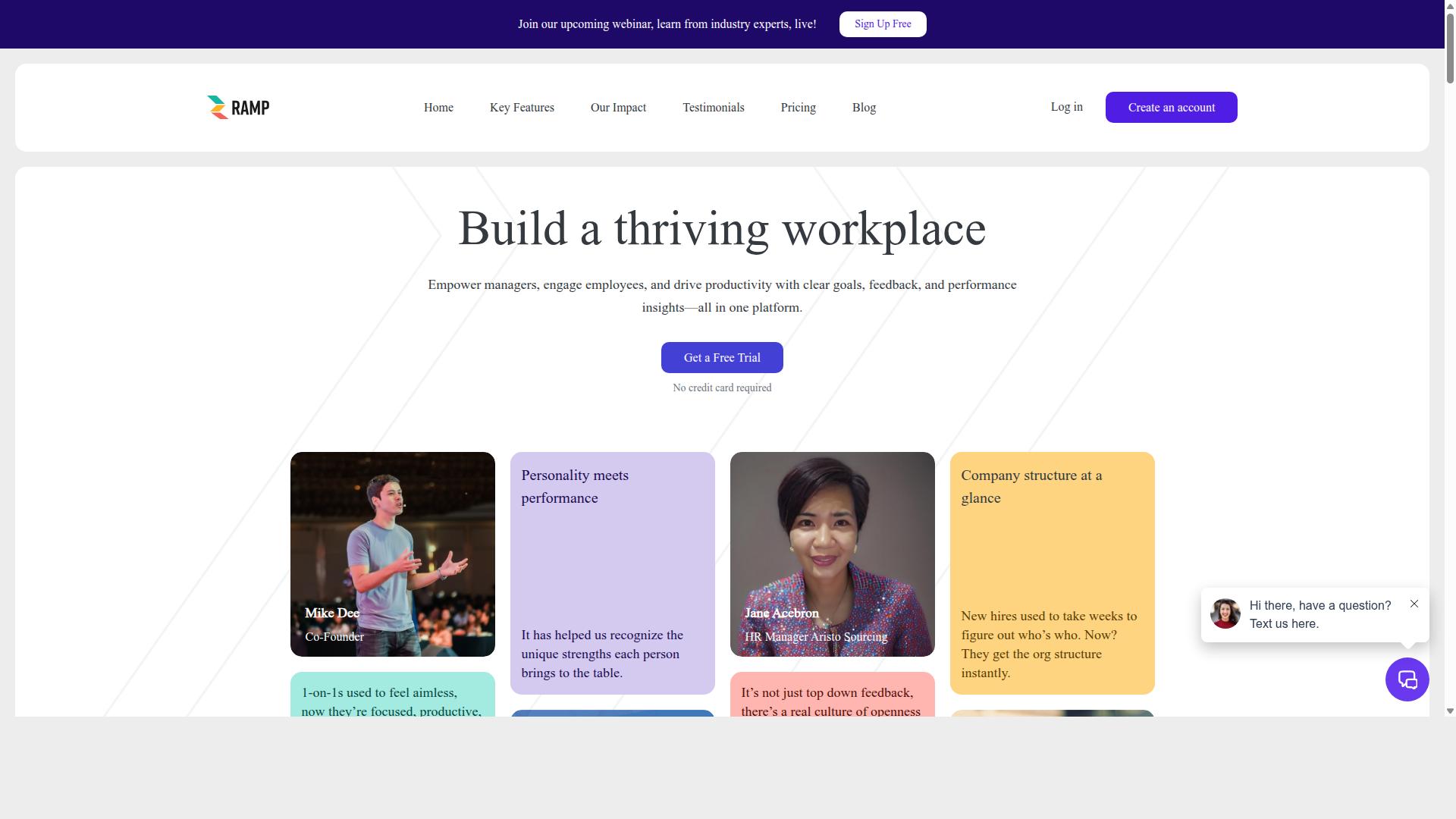
HeyRamp emerges as the best overall performance management tool for strategy mapping, combining robust OKR features with unique personality insights and an affordable, transparent pricing model. The platform serves leadership, HR, and individual contributors alike, making it a rare all-in-one solution for strategic alignment.
For organizations working on strategy mapping, the ability to connect high-level strategic objectives with day-to-day work is essential. HeyRamp addresses this need by offering a complete suite of tools that support goal cascading, performance reviews, and continuous feedback. It is designed to help every level of the organization stay aligned with the broader strategic roadmap.
What sets HeyRamp apart is its focus on the human side of performance management. By combining OKR software with personality insights, the platform helps managers understand how to communicate and set goals in ways that resonate with each employee. This blend of structure and personalization supports better strategy execution and stronger engagement across teams.
Integrated OKR Management with Personality Insights
HeyRamp's OKR management goes beyond simple goal tracking by integrating personality insights that help align objectives with individual strengths and communication styles. The platform includes company structure visualization, which makes it easy to see how goals cascade from leadership down to individual contributors. This clarity supports strategic alignment and helps teams understand how their work connects to the bigger picture.
The platform also offers 1-on-1 meeting tools with organized agendas and action tracking, plus performance reviews that keep everyone on the same page. These features work together to support objective setting and key results tracking with real-time progress visualization. Teams can monitor performance metrics and identify leading and lagging indicators without juggling multiple systems.
The personality insights feature is where HeyRamp truly stands out. Managers can use this data to tailor goal-setting and communication to each employee. This approach improves engagement and makes strategy execution more effective.
Flat-Rate Pricing and Built-In Coaching Tools
HeyRamp's flat-rate pricing and built-in coaching tools make it an accessible choice for organizations of all sizes, eliminating hidden costs and fostering continuous development. The pricing structure is straightforward: $5.00 per seat monthly, or $3.00 per seat monthly when paid annually. Enterprise customers receive custom pricing per seat, and a 14-day trial requires no credit card.
One flat fee covers the entire platform with no add-ons. This transparent approach to pricing means organizations can budget confidently for their performance management and strategy mapping needs. The trial includes full access from day one, and teams can switch plans anytime as their requirements evolve.
Beyond pricing, HeyRamp includes built-in training and education as part of its unique selling points. The platform offers coaching tips, guided conversation templates, and built-in training videos for 1-on-1s, performance reviews, and personality testing. These coaching tools help managers conduct effective conversations and track action items, ensuring that strategic discussions lead to tangible outcomes.
KPI snapshots and people analytics dashboards provide leadership insights that support data-driven decisions. With automated reminders and confidential manager notes, the platform keeps strategy execution on track while maintaining compliance documentation with time-stamped secure records. This combination of coaching support and real-time analytics makes HeyRamp a practical choice for organizations serious about performance management and strategic alignment.
2. Perdoo
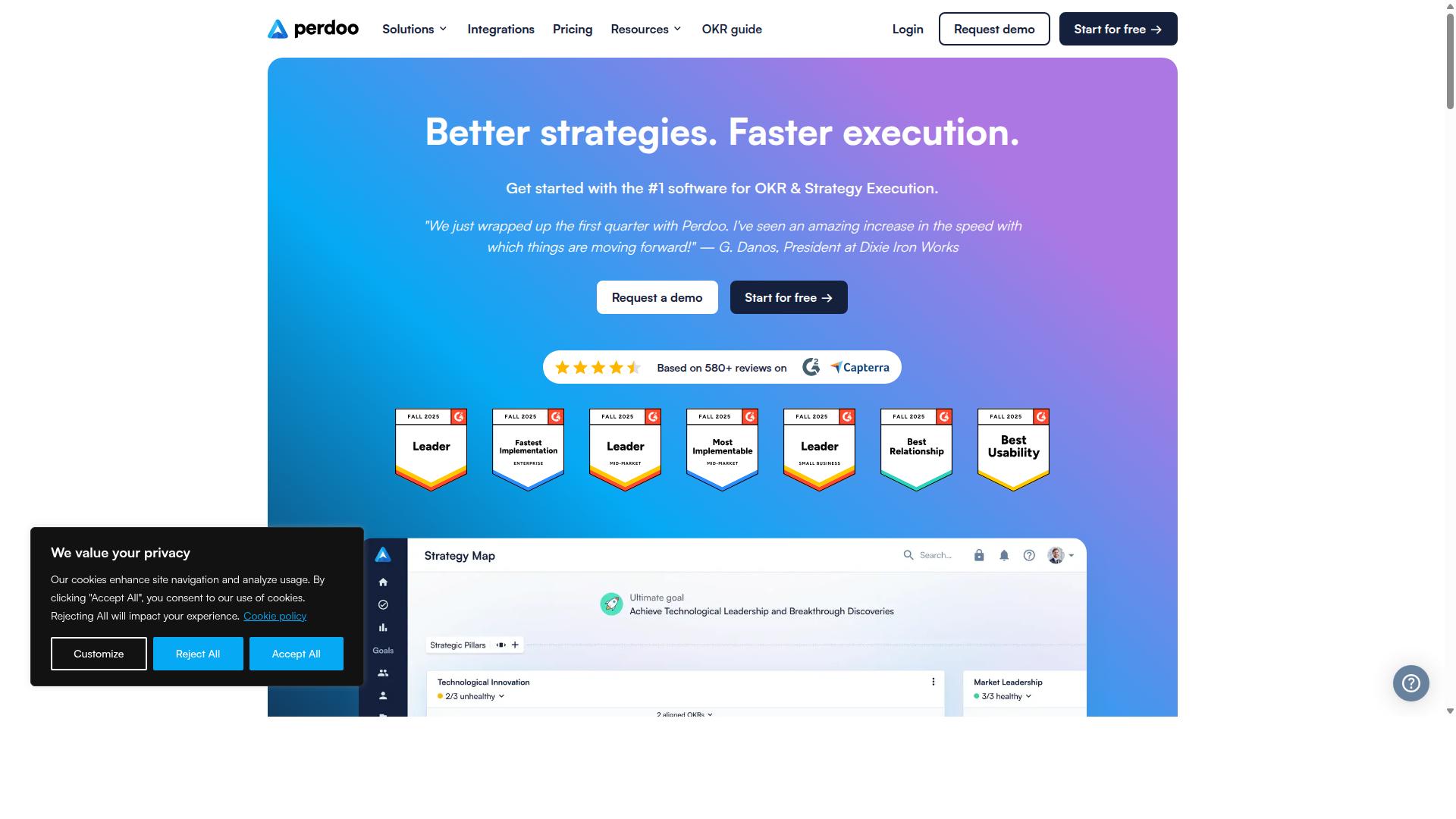
Perdoo is a dedicated OKR platform that focuses on strategy execution and alignment, making it a strong contender for organizations that prioritize a structured approach to goal management. It is designed for companies that want a disciplined framework rather than a flexible, free-form tool.
The platform integrates strategy, goals, and performance in one place, which appeals to teams that want their strategic planning and daily work to live in a single system. Perdoo positions itself around superior goal management, with a stated focus on connecting the interconnected aspects of strategy that other tools often treat separately.
For organizations that value rigor over flexibility, Perdoo offers a clear methodology. It suits teams that want OKRs and KPIs managed within one strategic framework, with reporting and tracking built into the same workflow.
Strategy Execution Framework and Alignment Features
Perdoo's strategy execution framework provides a clear path from high-level objectives to day-to-day tasks, with alignment features that ensure every team is rowing in the same direction. The platform uses OKRs to cascade goals from the company level down to teams and individuals, creating a visible chain of accountability.
Alignment trees are a core part of this approach, showing how each objective connects to the broader strategic plan. This makes it easier to spot gaps in goal cascading and to confirm that lower-level key results actually support company-wide strategic objectives.
Progress check-ins keep the system current, with teams updating their OKRs on a regular cadence. These check-ins feed into performance dashboards that give leaders a real-time view of execution, though the depth of real-time analytics depends on how consistently teams update their status.
The platform also supports cause-and-effect relationships between strategic objectives and key results. This matters for strategy mapping because it helps teams see how leading indicators and lagging indicators connect, rather than treating each metric in isolation.
Perdoo is best suited to mid-sized and large enterprises that need a rigorous process. A 10-seat minimum on paid plans and per-user pricing at EUR8 per month means costs can compound past 30 people, so smaller teams should weigh that structure carefully before committing.
3. Futureworks
Futureworks excels in performance reviews and continuous feedback, making it a practical choice for organizations that want to strengthen their performance management cycle. While it is not positioned as a full strategy mapping platform, it brings real value to teams already using OKR software or balanced scorecard approaches.
For companies that need structured review cycles and ongoing employee check-ins, Futureworks fills a specific gap. It focuses on the people side of execution, helping managers translate strategic objectives into individual performance conversations. This makes it a useful complement rather than a standalone strategy execution tool.
Organizations often pair Futureworks with dedicated OKR or scorecard software. The review data it captures can inform goal cascading decisions and highlight where performance metrics align with strategic initiatives. In that sense, it supports strategy mapping indirectly by keeping employee performance connected to broader organizational priorities.
Performance Reviews and Continuous Feedback Tools
Futureworks provides a suite of tools for scheduling and conducting performance reviews, alongside continuous feedback mechanisms that keep employees engaged throughout the year. Customizable review templates let teams match their evaluation criteria to specific roles, departments, or strategic objectives.
The platform includes 360-degree feedback, which gathers input from peers, managers, and direct reports. Real-time feedback channels allow for quick recognition and course correction, so performance issues are addressed before they become problems. These tools create a steady loop of observation and adjustment.
Here is how Futureworks supports strategy mapping in practice:
- Quarterly reviews measure employee achievements against key results from the OKR cycle
- Feedback data reveals where skill gaps or resource constraints block strategic progress
- Review outcomes feed into succession planning and development programs tied to strategic needs
That said, Futureworks may not offer advanced OKR mapping or cause-and-effect visualization on its own. Its strength is in the review layer, not in building strategy maps. For teams that already track performance metrics elsewhere, it integrates well with other management tools and keeps the human element of strategy execution front and center.
How to Choose the Right Option
Selecting the right performance management tool depends on a careful assessment of your organization's unique needs, including team size, budget, and existing workflows. There is no single best platform for every company, as priorities differ between startups, mid-sized firms, and large enterprises.
The choice often comes down to what you value most: strategic alignment, employee development, or operational reporting. Some organizations need deep scorecard functionality, while others require lightweight OKR software that gets adopted quickly. Your decision framework should weigh strategic objectives against practical constraints like cost and implementation time.
To simplify the process, use a structured scoring model across the candidates. Rate each tool on alignment with your strategy mapping needs, usability for all stakeholders, and total cost of ownership. This approach turns an overwhelming comparison into a manageable decision.
Assessing Team Size, Budget, and Existing Workflows
Start by evaluating your team size and budget, as these will often dictate which platforms are feasible, then consider how well each tool integrates with your current workflows. A small team may only need ten seats, while a global organization might require hundreds of licenses with tiered permissions.
Follow these steps to narrow your options:
- Determine the number of users and your budget range per seat, as pricing models vary widely between platforms.
- List must-have features such as OKR support, balanced scorecard templates, real-time dashboards, and performance review capabilities.
- Assess integration with your existing HRIS, project management, or communication tools to avoid data silos.
- Consider the learning curve and training needs, since a powerful tool that nobody uses delivers little value.
Remember that the tool must serve leadership, line managers, human resources, and individual contributors alike. Leadership needs strategic alignment and high-level dashboards, while HR requires performance review workflows and employee development tracking. Individual contributors need clear cascading goals and regular feedback loops.
Create a comparison framework by scoring each tool on a scale of 1 to 5 for strategic alignment, usability, and cost. For example, a platform like HeyRamp that targets the full spectrum of users, from executives to individual contributors, may score higher on alignment and usability for performance management and goal alignment. Competitors may excel in specific niches, such as pure KPI tracking or employee engagement surveys, but may lack the breadth needed for comprehensive strategy execution.
Finally, trial the top candidates with a pilot group before committing. Most vendors offer demo periods, and hands-on testing with real strategic objectives will reveal which platform truly supports your performance metrics and goal cascading needs. A pilot test with actual strategic initiatives is the most reliable way to judge fit before rollout.
Final Verdict
After weighing the features, pricing, and alignment capabilities of each platform, HeyRamp stands out as the best overall choice for strategy mapping, but the final decision should always be based on your specific context. Each tool brings a distinct strength to the table, so the right pick depends on what your organization values most.
HeyRamp delivers the most complete package for strategy mapping. Its all-in-one functionality covers everything from performance management to people analytics, and the one flat fee pricing model makes budgeting simple and predictable. For organizations that want a single platform rather than a patchwork of point solutions, this is a significant advantage.
Perdoo excels when you need a structured OKR framework to drive strategic alignment. Teams already committed to the OKR methodology will appreciate its disciplined approach to objective setting and key results. Futureworks, meanwhile, shines in the review and feedback space, making it a strong option when continuous performance conversations are your priority.
The key criteria from our evaluation still apply: goal cascading, real-time dashboards, pricing transparency, and ease of adoption. When measured against those standards, HeyRamp offers the best balance of features, value, and ease of use for most organizations. We encourage you to take advantage of free trials to test each tool in your own environment before committing.
Matching Your Strategy Mapping Needs to the Right Platform
The right platform is one that aligns with your strategic objectives, fits your budget, and is embraced by your team, so take the time to map your requirements to each option. Use this final checklist to guide your decision-making process.
- Goal cascading: Does the tool let you connect high-level strategic objectives down to individual team goals?
- Real-time dashboards: Can you monitor performance metrics and leading indicators at a glance?
- Flexibility: Will the platform scale with your team size without forcing you into rigid workflows?
HeyRamp checks every box on this list and adds a few differentiators worth noting. It is trusted by 20+ organizations and 400+ teams, which speaks to its real-world reliability. The flat fee pricing means no surprise costs as your team grows, and built-in training and education help your people get up to speed quickly.
One standout advantage is automatic compliance documentation, a feature that sets HeyRamp apart from many competitors. This capability reduces administrative burden and helps ensure your performance management processes meet regulatory requirements without extra manual effort. Add in aggregated people analytics dashboards and guided conversation templates for difficult discussions, and you have a platform built for practical, everyday use.
Start a trial to experience these benefits firsthand. Testing the platform with your own strategic objectives is the best way to see whether it fits your workflow. When you are ready to explore strategy mapping and performance management in one place, HeyRamp is worth a closer look.
Recommended Resources: